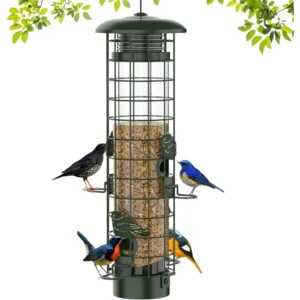
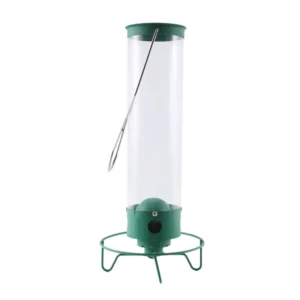
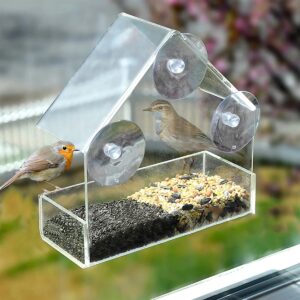
Suet Feeders & Baffles
A suet feeder earns its place in winter, when high-fat food brings woodpeckers, nuthatches, and chickadees to a yard that seed alone won’t fill. This collection covers that cold-weather side of feeding — plus the unglamorous hardware that protects the rest of your setup: pole and hanging baffles that stop squirrels before they ever reach the feeder. If your main feeder keeps getting raided, a wide cone baffle below it is often the missing piece; placement matters as much as the gear, and our product pages explain both. Orders ship in 1–3 business days, backed by our 30-day money-back guarantee, with free U.S. shipping over $50. Building a full defense? Browse our squirrel-proof bird feeders to anchor the system.
Showing the single result
-
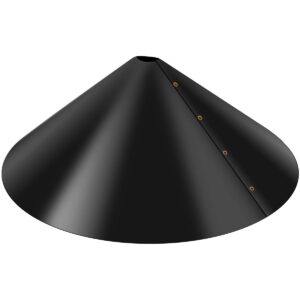 $29.99 Select options This product has multiple variants. The options may be chosen on the product page
Showing the single result
How to Choose Suet Feeders and Baffles
This aisle covers two jobs: feeding the birds seed won't attract, and protecting everything else you've hung. What matters for each:
- Suet cage fit: A cage should take a standard suet cake without forcing, and open easily for refills — a hinged top beats fiddly clips in cold weather.
- Baffle width: Narrow cones are speed bumps. A baffle needs real diameter — in the 18-inch class — so a climbing squirrel runs out of grip before they run out of cone.
- Baffle mounting: Match the baffle to your setup — a pole-mount kit blocks the climb from below; a hanging kit shields a feeder from drops from above.
Pole-Mounted vs. Hanging Baffles
A pole-mounted baffle sits below the feeder like a ceiling on the squirrel's staircase — the right choice when your feeder stands on a pole or shepherd's hook. A hanging baffle works the other direction: it hangs above the feeder and tilts away anything that lands on it, which is what you want under a tree branch. Same cone, opposite jobs — that's why our baffle comes as either a pole-mount kit or a hanging kit, so you can match it to your setup.
Frequently Asked Questions
Does a squirrel baffle really work?
Yes — when it's wide enough and placed right. Pair the baffle with the 5-7-9 rule: keep the feeder past a squirrel's 5-foot vertical jump, 7-foot horizontal leap, and 9-foot drop from above.
When should I feed suet?
Cold months are prime time: high-fat food is exactly what woodpeckers, nuthatches, and chickadees need. In hot weather, switch to no-melt suet or pause — soft suet spoils and can foul feathers.
How high should the baffle sit on the pole?
Top of the baffle around chest height — high enough that a squirrel can't jump clean over it, low enough to leave room between baffle and feeder.
For the full anti-squirrel playbook and winter feeding guides, visit our birding guides.